
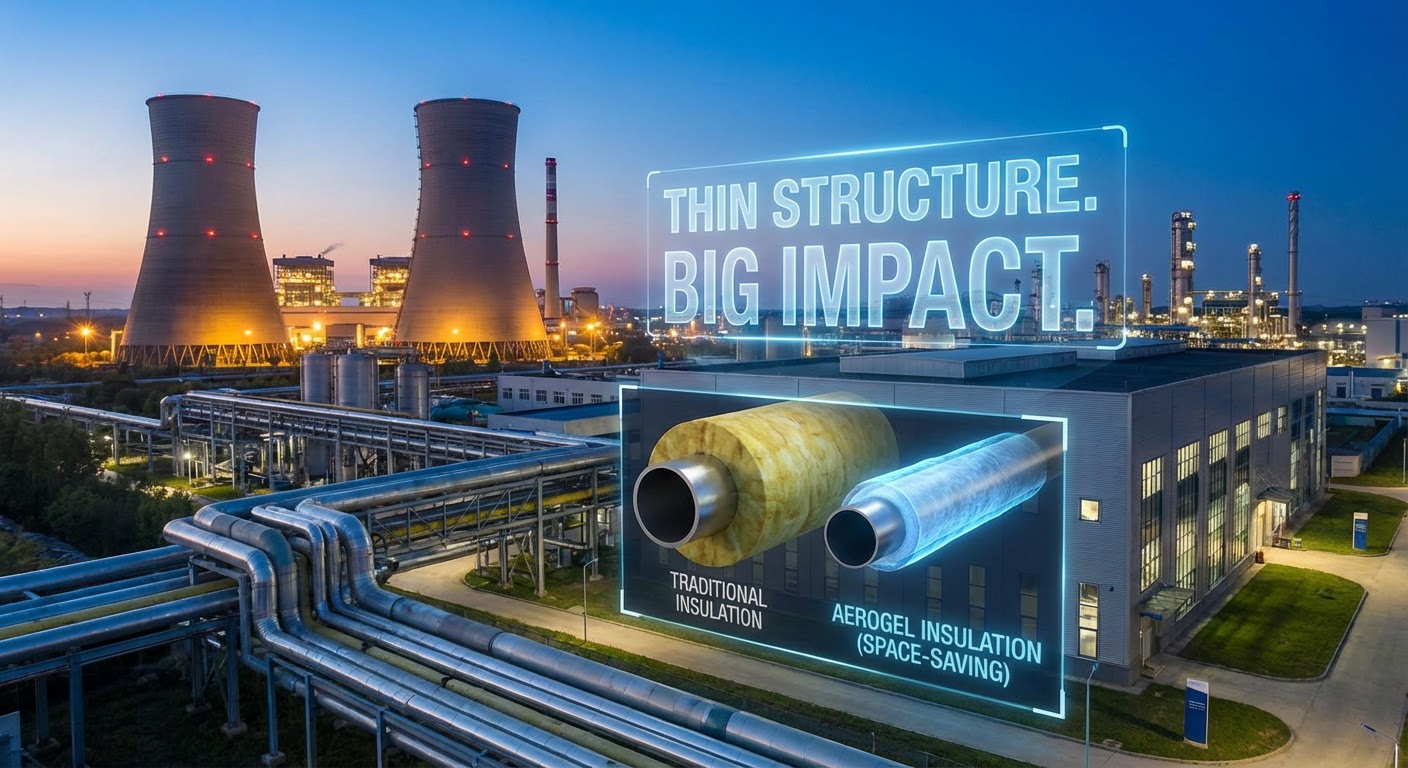

When Space Matters: Smarter Insulation for Modern Industry
Imagine being able to increase usable space by up to 150% with a single change of material. One of the most significant advantages of aerogel insulation is its exceptionally high thermal resistance per unit thickness. This unique property allows engineers and designers to achieve the same level of insulation performance using far less material (40%–60% less) compared to conventional insulation products such as fiberglass, mineral wool, or polyurethane foam.
In applications where space is limited and structural efficiency is critical, this thin-profile capability becomes a major technical and economic advantage.
How do we compare to conventional insulation?
In the early days of aerogel, it was primarily used in aerospace applications. Today, it is marketed and sold across a wide range of industries due to its outstanding performance. The question is : why do we do what we do?
Compared to conventional insulation, aerogel can provide the same level of insulation at half the thickness. For example, 50 mm of aerogel can achieve the same level of thermal insulation as 100 mm of cellular glass.
At the same time, aerogel distributed by K-Aerogel does not easily break or compress when force is applied to it. Its nanoporous structure helps prevent pipes from breaking or losing shape when stepped on, which allows aerogel to maintain high strength despite its low mass.
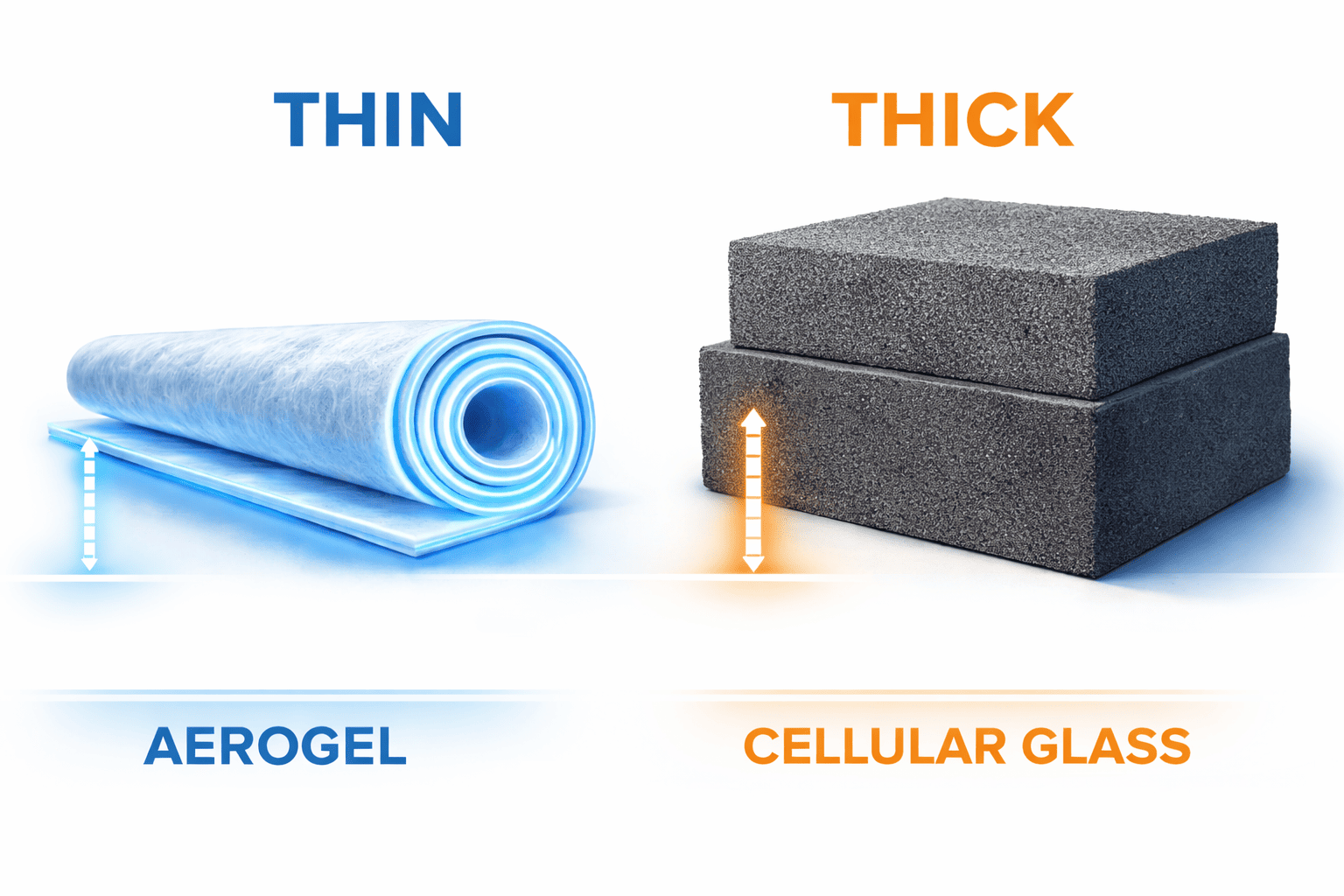
The Thin-Profile Advantage
In industrial applications involving hot or cold pipes, insulation thickness directly affects pipe diameter. Thicker insulation increases cladding material requirements, structural support demands, installation complexity, and overall system costs.
Using aerogel reduces the outer pipe diameter, allowing easier installation in confined mechanical rooms, lowering structural loads on pipe supports, and decreasing material usage. Visualized simply, a space that would normally fit three pipes using conventional insulation can now fit four pipes using aerogel insulation.
Aerogel’s flexibility and minimal thickness make it particularly effective in areas where traditional insulation struggles, such as around flanges, tees, and irregular equipment shapes.
Although aerogel has a higher cost per unit volume than conventional insulation materials, its thin profile can generate indirect financial benefits, including simplified installation in confined areas and the ability to increase the number of machines operating simultaneously in a factory.
The thin profile of aerogel helps maintain a low K-value. A low K-value translates to excellent thermal insulation and improved overall efficiency, as less heat transfers through the material and dissipates into the surrounding air.
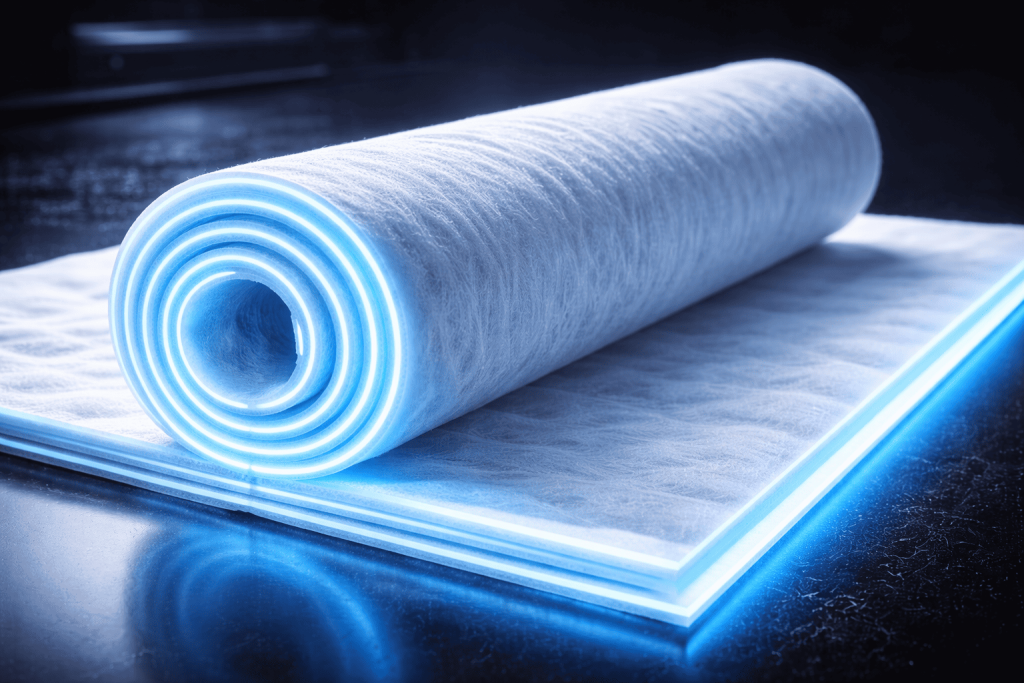
Compared to traditional insulation, aerogel is also easier to cut and customize, proving its versatility across a wide array of pipes, steam lines, and machinery. Aerogel’s thin-profile advantage allows engineers and architects to achieve superior thermal performance while minimizing material thickness. This leads to :
2. Increased usable space
3. Improved design flexibility
4. Enhanced feasibility for retrofits and compact systems